

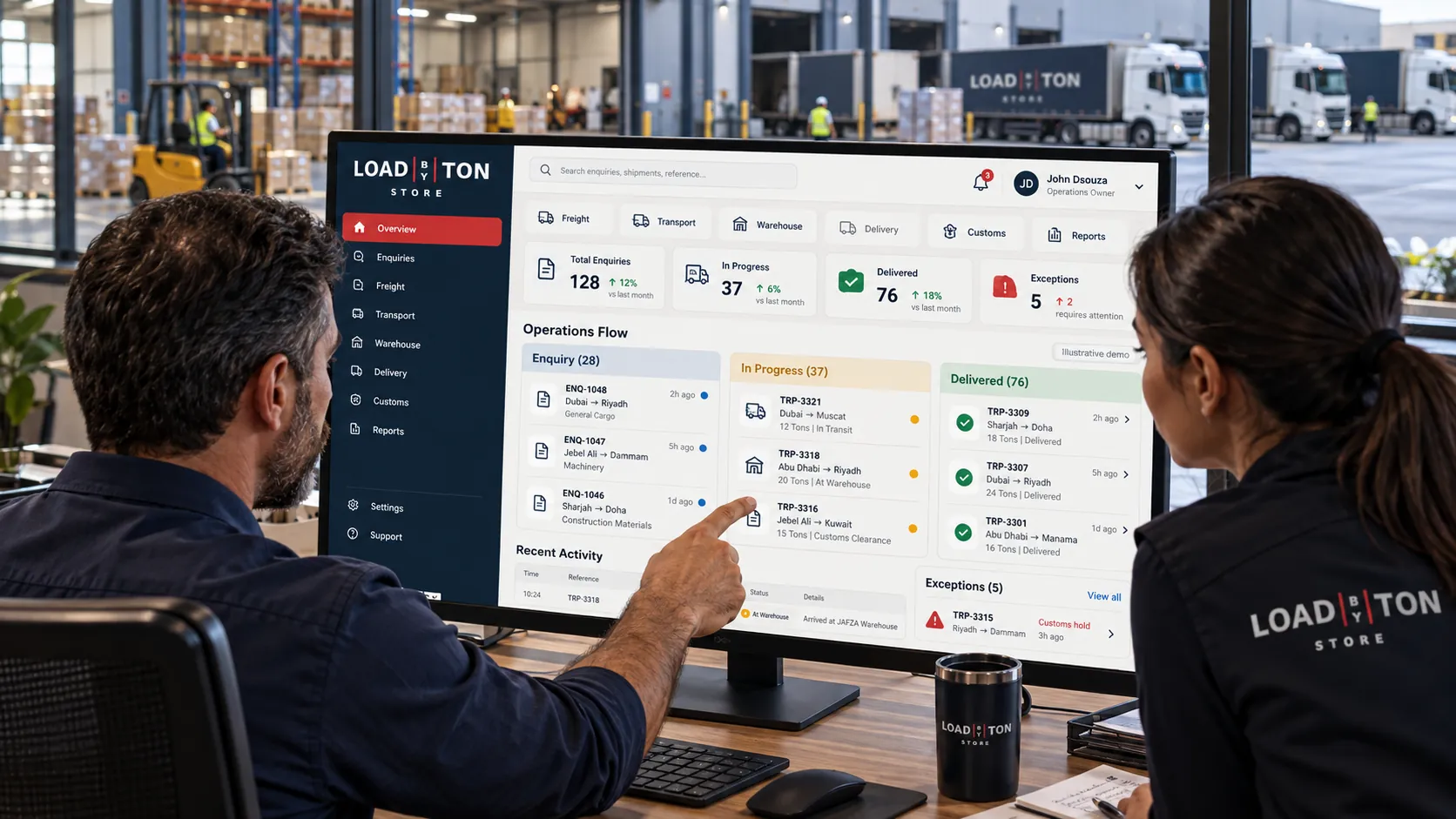
One platform core.
Seven products.
Identity, organisations, permissions, master records, documents, tasks, communications, audit, integrations and reporting sit under every product.
LOADTON
Enquiry → quote → job → supplier costs → documents → invoice → collection.
LOADTON
Trips, vehicles, drivers, subcontractors, POD and trip profitability.
LOADTON
Owner-separated stock ledger, inbound, counts and activity billing — shipped as two packs: E-commerce fulfilment (merchant orders, pick/pack/ship, returns) and Contract warehouse (owner-separated custody stock, FIFO dispatch, blind counts).
LOADTON
Parcels, delivery runs, rider app, attempts and returns, cash-on-delivery collection, rider cash handover and merchant remittance.
LOADTON
Declaration cases, evidence checklist, valuation estimate, independent approval, deposits, inspections and a handover pack for the official channel (no direct filing; specialist review required).
LOADTON
Job costing, invoices, collections and one validated accounting bridge.
LOADTON
Owner dashboard: margin, unbilled jobs, exposure, exceptions — with source records.
What this is, and is not
Commercial domains (CRM, rates and contracts, quotations) and financial domains (job costing, invoicing, collections, payables and one validated accounting integration) are shared, so you are never charged twice for the same record.
LOADTON.store sells software subscriptions, setup and support services. Your customers use the software to sell and deliver freight, transport, clearance, storage or delivery services. Those are separate commercial relationships and separate accounting books. We are not a freight broker, cargo marketplace or carrier, and we do not hold customer funds.
Make room for better operations.
Start with a real workspace. Build around your business.